

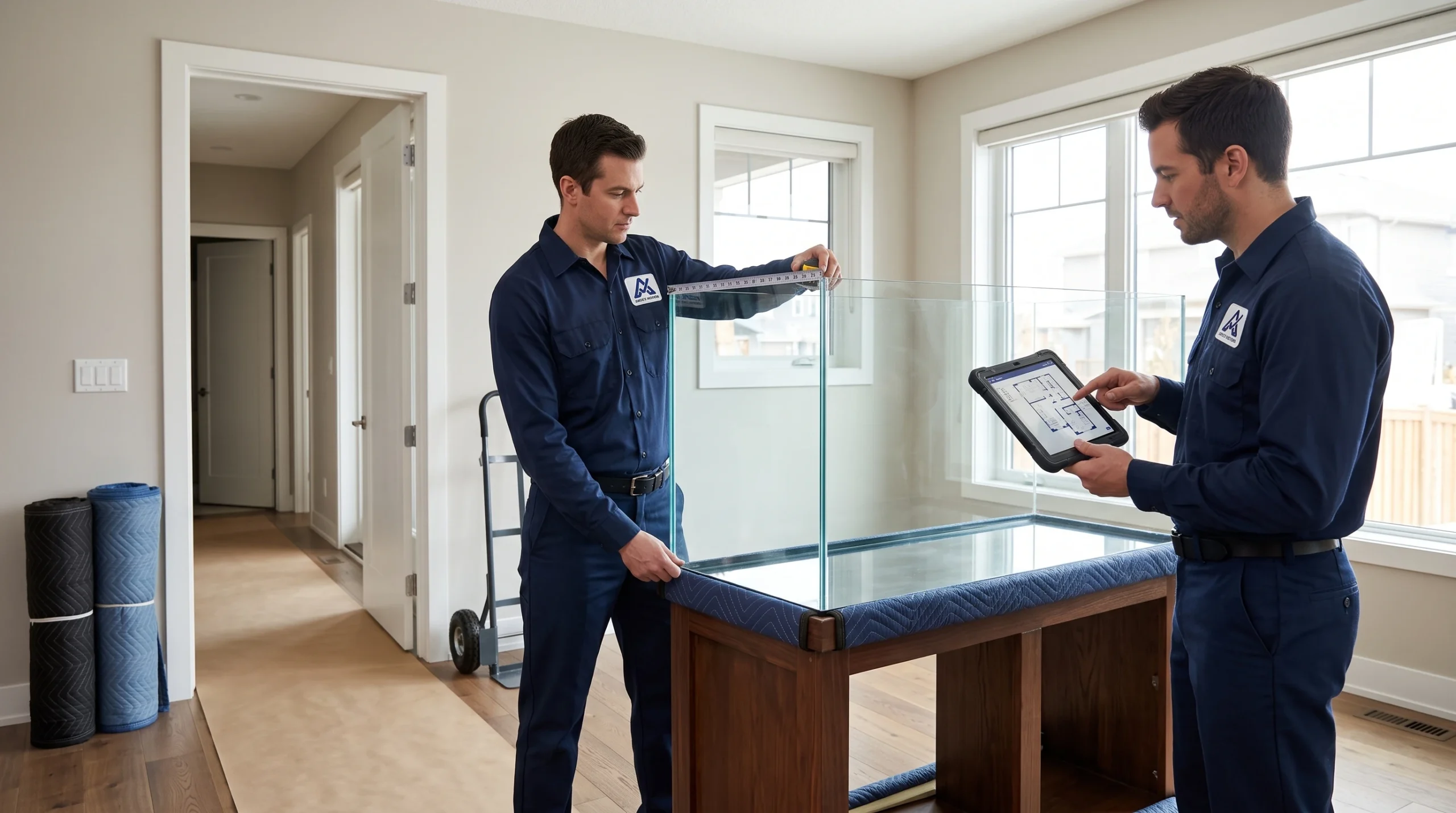
How to Move a Fish Tank: Quick Summary
- Confirm the aquarium’s physical moving scope before moving day.
- Arrange suitable live-fish care and transportation separately.
- Ardie’s Movers declines live animals for transport.
- Have the aquarium drained, empty and secured before the crew arrives.
- Send photos and measurements of the tank, stand and complete route.
- Use qualified aquarium guidance for water, filtration, plants and system restart.
Moving an aquarium requires separate plans for the physical tank, its access route and its living contents. Ardie’s Movers can assess the physical aquarium, stand and accepted equipment, but live animals are declined for transport. Arrange fish care and transportation separately before moving day.
What Should You Confirm First?
Contact Ardie’s Movers before moving day and provide current photos of the aquarium, stand and complete access route at both properties.
Your quote request should include:
- Tank and stand dimensions
- Pickup and delivery addresses
- Your preferred moving date
- Interior and exterior stairs
- Doorways, hallways and tight turns
- Elevators and building restrictions
- Parking and carrying distances
- The intended placement at the destination
- Any accepted equipment that may be included
Treat the physical aquarium and its living contents as separate planning responsibilities. The moving assessment concerns the accepted physical items, while fish care requires appropriate aquarium guidance.
Can Ardie’s Movers Transport Live Fish?
No. Ardie’s Movers declines live animals for transport. Fish and other living aquarium inhabitants must not be treated as ordinary moving-box contents or placed in the moving truck.
Arrange suitable care and transportation separately with an aquarium professional or another qualified source. Make those arrangements early so there is no confusion about responsibilities on moving day.
Keep medications, animal-care instructions and other critical supplies with the person responsible for the fish.
How Should You Prepare the Aquarium?
Follow qualified aquarium guidance for fish care, water handling, filtration, plants, substrate and restarting the system.
The moving crew should receive an empty, secured physical aquarium with a clear carrying route. Do not present a tank filled with water to the moving team.
Tank construction, dimensions, glass thickness, stand design and access conditions can all affect the physical assessment. Do not rely only on the aquarium’s advertised capacity.
Should a Fish Tank Be Moved With Water in It?
No. Do not present a water-filled aquarium for moving. Water adds substantial weight and movement inside the tank can place stress on the glass and seams.
Use appropriate aquarium guidance to determine how the water, fish, plants, filtration and substrate should be handled. Ardie’s Movers should not be presented as the provider of animal-care or aquarium-system instructions.
The practical preparation goal for the moving crew is an empty and secured physical aquarium.
Why Does the Access Route Matter?
Aquarium dimensions and weight are only part of the moving plan. The route through both properties also affects the assessment.
Show and measure:
- Doorways and thresholds
- Hallways and tight corners
- Interior and exterior stairs
- Stair widths and landings
- Elevator openings and interiors
- Railings and low clearances
- Slopes and exterior pathways
- The distance from legal truck parking to the entrance
- The aquarium’s intended destination location
Clear the complete route before the crew arrives. Remove furniture, loose cords, packing supplies and other obstacles that could interfere with handling the tank or stand.
What Photos Should You Send?
Photograph the aquarium from several angles and include the complete stand. Show any separate lids, cabinets or accepted equipment that may be part of the represented scope.
Photograph the full route rather than only close views of the aquarium. Include the current room, doorways, hallways, stairs, elevators, exterior access and expected truck position.
At the destination, show the route to the intended placement and confirm that the stand location has been chosen before moving day.
What Should You Measure?
Measure the aquarium and stand, then compare those dimensions with the complete route at both properties.
Useful measurements include:
- Aquarium width, height and depth
- Stand width, height and depth
- Doorway width and height
- Hallway width
- Stair width
- Landing dimensions
- Elevator-door and interior dimensions
- Clearance around tight turns
Identify any opening that appears close. Do not assume the aquarium will fit because another piece of furniture previously used the same route.
How Do You Move a Fish Tank Through Tight Access?
Begin with accurate aquarium, stand and route measurements. Photograph tight turns from several angles and include surrounding walls, railings, thresholds and other obstacles.
The aquarium should be empty and prepared according to suitable aquarium guidance before the physical move begins. Keep the carrying route clear and disclose any access condition that may affect handling.
Share the current photos and measurements with Ardie’s Movers before the moving date so the tank and stand can be reviewed as part of the represented scope.
How Do You Move a Fish Tank Without Transporting Live Fish?
Separate animal care from the physical moving plan.
Arrange an aquarium professional or another appropriate person to advise on fish handling, water, filtration, plants, temperature and restarting the system. Ardie’s Movers declines live animals, so fish and their care supplies must not be treated as ordinary moving contents.
Write down who is responsible for each stage and when the empty tank will be ready. Keep medications, instructions and critical equipment with the person handling the living system.
At the destination, confirm the stand location and access route before the physical aquarium arrives.
What Is the Safe Planning Sequence?
Organize the work into four separate stages:
- Animal-care planning: Arrange suitable care and transportation for fish and other living contents.
- Aquarium preparation: Follow qualified guidance for draining, securing and organizing the physical system.
- Physical moving: Have Ardie’s Movers handle the accepted empty tank, stand and represented equipment.
- System restart: Follow qualified aquarium guidance for rebuilding and restarting the living system.
This division keeps responsibilities clear and avoids implying that the moving crew provides animal-care services.
What Should You Avoid Loading?
Keep live fish, other animals, medications, valuables, identification and important documents with you or the person responsible for them.
Do not place a full aquarium, live animals or undecided animal-care supplies into the moving load.
Organize accepted parts and accessories so they can be identified at the destination. Use a written handoff list if family members, an aquarium professional and the moving team have different responsibilities.
How Should You Prepare the Destination?
Choose the aquarium’s destination before moving day and confirm that the stand and route are ready.
Measure the final room, entrance and any tight turns. Clear the area so the crew is not waiting while a placement decision is made.
Use qualified aquarium advice to determine whether the location, support, levelling and environmental conditions are appropriate for the aquarium system.
What Should Never Be Left Until Moving Day?
Do not leave the following undecided:
- Who will care for and transport the fish
- How and when the aquarium will be drained
- Who will handle water, filtration, plants and substrate
- The tank and stand measurements
- The access-route measurements
- The stand’s destination placement
- The responsibilities for accepted equipment and accessories
Provide the necessary details before the quote is prepared. A tank should not be presented to the crew full of water or with live-animal responsibilities unresolved.
What Happens if the Aquarium Scope Changes?
Tell Ardie’s Movers if the aquarium, stand, address, date, destination placement or route changes after the quote is prepared.
New stairs, a different doorway, restricted parking or additional equipment may materially change the represented physical work and require review.
Reporting changes early provides time to determine whether the moving plan remains suitable.
Frequently Asked Questions
Can Ardie’s Movers Transport Live Fish?
No. Ardie’s Movers declines live animals. Arrange appropriate fish care and transportation separately.
Can a Fish Tank Be Moved With Water in It?
Do not present a water-filled aquarium for moving. Follow qualified aquarium guidance for draining and preparing the system before the assessed physical move.
What Aquarium Details Belong in the Quote Request?
Send current photos, aquarium and stand dimensions, both addresses, the moving date, stairs, doorways, tight turns, carrying distance, parking conditions and the intended destination placement.
Who Should Advise on Filter Media and Restarting the Aquarium?
Use an aquarium professional or another qualified source. Ardie’s Movers should not be presented as the provider of animal-care or aquarium-system advice.
Does the Aquarium Need to Be Empty Before the Crew Arrives?
Yes. The practical preparation goal is an empty and secured physical aquarium with animal-care arrangements handled separately.
Should the Destination Location Be Chosen Before Moving Day?
Yes. Confirm the stand placement and route before the aquarium arrives so the physical tank can be placed without delaying the moving crew.
Related Moving Help
- Fish tank and aquarium moving services
- Residential moving services
- How to pack for a move
- Request an aquarium-moving quote
Get a Fixed-Price Aquarium Moving Quote
Send your moving date, both addresses, aquarium and stand dimensions, and photos of the physical aquarium and complete route. Include stairs, doorways, tight turns, parking conditions and the intended destination placement.