



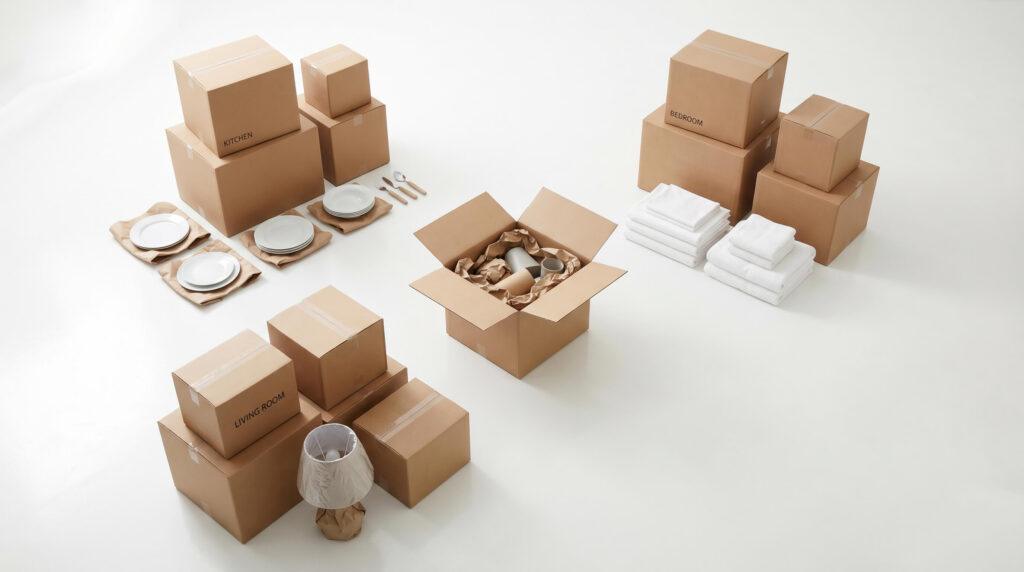
Packing is where most moves go wrong. Not the truck, not the crew — the boxes. Poorly packed boxes break things, slow down loading, and turn what should be a straightforward move into a frustrating one. After 30 years of moving families across Arnprior, Ottawa, and the Ottawa Valley, we’ve seen it all — and we’ve put together this guide to help you pack smarter, not harder.
Before You Start Packing — The Essentials
Get the Right Supplies
Don’t improvise with random boxes from the grocery store. You need:
- Small boxes (1.5 cu ft) — for heavy items like books, tools, and canned food
- Medium boxes (3 cu ft) — for kitchen items, small appliances, and general household goods
- Large boxes (4.5 cu ft) — for light, bulky items like pillows, linens, and lampshades
- Wardrobe boxes — for hanging clothes (worth renting if you have a lot)
- Packing paper — never newspaper (the ink transfers)
- Bubble wrap — for fragile items
- Quality packing tape — not masking tape
- Permanent markers — for labelling every box on the top AND on the side
Declutter Before You Pack
Don’t pay to move things you don’t want. Before you pack a single box, go room by room and separate items into: keep, donate, sell, and throw away. Fewer boxes = a faster move and a lower bill.
Start Early — Much Earlier Than You Think
Most people underestimate how long packing takes. A three-bedroom house typically takes 2–3 full days to pack properly. If you have a lot of books, a garage, or a storage room, add another day. Start with the rooms you use least and work toward the rooms you use daily.
Room-by-Room Packing Guide
Kitchen
The kitchen is the hardest room to pack — and the one most people underestimate. Give yourself at least one full day.
- Wrap plates individually in packing paper and stack them vertically in boxes (not flat — they’re more likely to crack flat)
- Wrap glasses in paper and fill the interior with crumpled paper
- Pack heavy items (cast iron, appliances) in small boxes only
- Keep knives safe by wrapping them in paper and securing with tape
- Label every kitchen box as FRAGILE on the top and sides
- Pack a “last in, first out” kitchen box: kettle, coffee maker, a few mugs, a plate, cutlery, and dish soap — you’ll want this the first night
Living Room
- Wrap lamp bases in packing paper; pack lampshades in large boxes with nothing heavy on top
- Disassemble furniture where possible — legs off coffee tables, shelves out of bookcases
- Take photos of your electronics setup before you unplug anything
- Use your soft items (towels, blankets, sweaters) as free padding around fragile items in boxes
Bedrooms
- Use wardrobe boxes for hanging clothes — it takes 5 minutes and saves hours of folding and re-hanging
- Pack folded clothes directly in dresser drawers where possible — your mover can sometimes transport the dresser with clothes still inside if the drawers are taped shut and the dresser isn’t too heavy
- Pack bedding and pillows in large boxes or vacuum bags
- Label every box with the room it belongs to — “Master Bedroom,” “Kids Room,” etc.
Bathroom
- Seal liquid bottles with tape or packing wrap to prevent leaks
- Pack toiletries in a resealable bag inside the box — just in case
- Throw away old medications and products you haven’t used in a year
Books & Home Office
- Books go in small boxes only — a box of books becomes impossible to lift fast
- Label all cables with a piece of masking tape before unplugging — “monitor cable,” “desk lamp,” etc.
- Back up your computer before the move, and transport it and hard drives separately in your car if possible
Garage & Basement
- Drain gas and oil from lawn mowers, snow blowers, and power tools before packing
- Dispose of paint, solvents, and chemicals — moving companies cannot legally transport hazardous materials
- Use original boxes for power tools where possible
How to Label Boxes Properly
Bad labelling is one of the main reasons unpacking is miserable. Here’s the system that works:
- Write the destination room on every box (where it goes in the NEW house, not the old one)
- Write FRAGILE on all sides of fragile boxes — not just the top
- Add a brief contents note: “Kitchen — plates & mugs” or “Living Room — books”
- Number your boxes and keep a simple list: Box 1 — master bedroom clothes, Box 2 — kitchen dishes, etc. If a box goes missing, you’ll know immediately
What NOT to Pack
Some items shouldn’t go on the moving truck at all:
- Valuables — jewellery, cash, important documents (passport, birth certificates, mortgage papers) — keep these with you
- Medications — pack a separate bag and take it in your car
- Electronics you’ll need immediately — laptop, phone charger, kids’ tablets for the first night
- Hazardous materials — paint, propane tanks, gasoline, certain cleaning products — these cannot legally be transported by a moving company
- Plants — most movers won’t take them; transport plants in your own vehicle
The First-Night Box — Don’t Skip This
Pack one box (or a bag) that goes in your car — not on the truck. Include everything you need for the first 24 hours in your new home:
- Toilet paper and hand soap
- Towels and a change of clothes
- Phone chargers
- Snacks and a kettle or coffee maker
- Kids’ comfort items or toys
- Basic toolkit (screwdriver, box cutter, hammer)
- Medications
Label it “OPEN FIRST” and make sure it rides with you, not on the truck.
A Note for Ottawa Valley Residents
If you’re moving within or around Arnprior, Ottawa, Kanata, Renfrew County, or anywhere in the Ottawa Valley, the same principles apply — but a few local factors are worth keeping in mind.
If you’re moving in spring or fall in Eastern Ontario, watch out for rainy days and muddy driveways. Have plastic sheeting or tarps ready to protect boxes being moved through the rain. If you’re in a condo or apartment building in Ottawa or Kanata, you’ll need to book the service elevator in advance — usually 2 weeks minimum.
And if you have items that need special handling — pianos, fish tanks, gun safes, or large antiques — those are worth a separate conversation with your movers before move day, not a surprise on the morning.
Learn more about our Piano Moving Service
Learn more about our Fish Tank Moving Service
Ready to Book Your Move?
If you’re planning a move in Arnprior, Ottawa, or anywhere across the Ottawa Valley and Renfrew County, Ardie’s Movers is here to help. Get in touch for a free, no-obligation estimate.
Get a free estimate
Call: 343-353-9900
ardiesmovers.com/blog/how-to-pack-for-a-move
Serving Arnprior, Ottawa Valley & Renfrew County
