

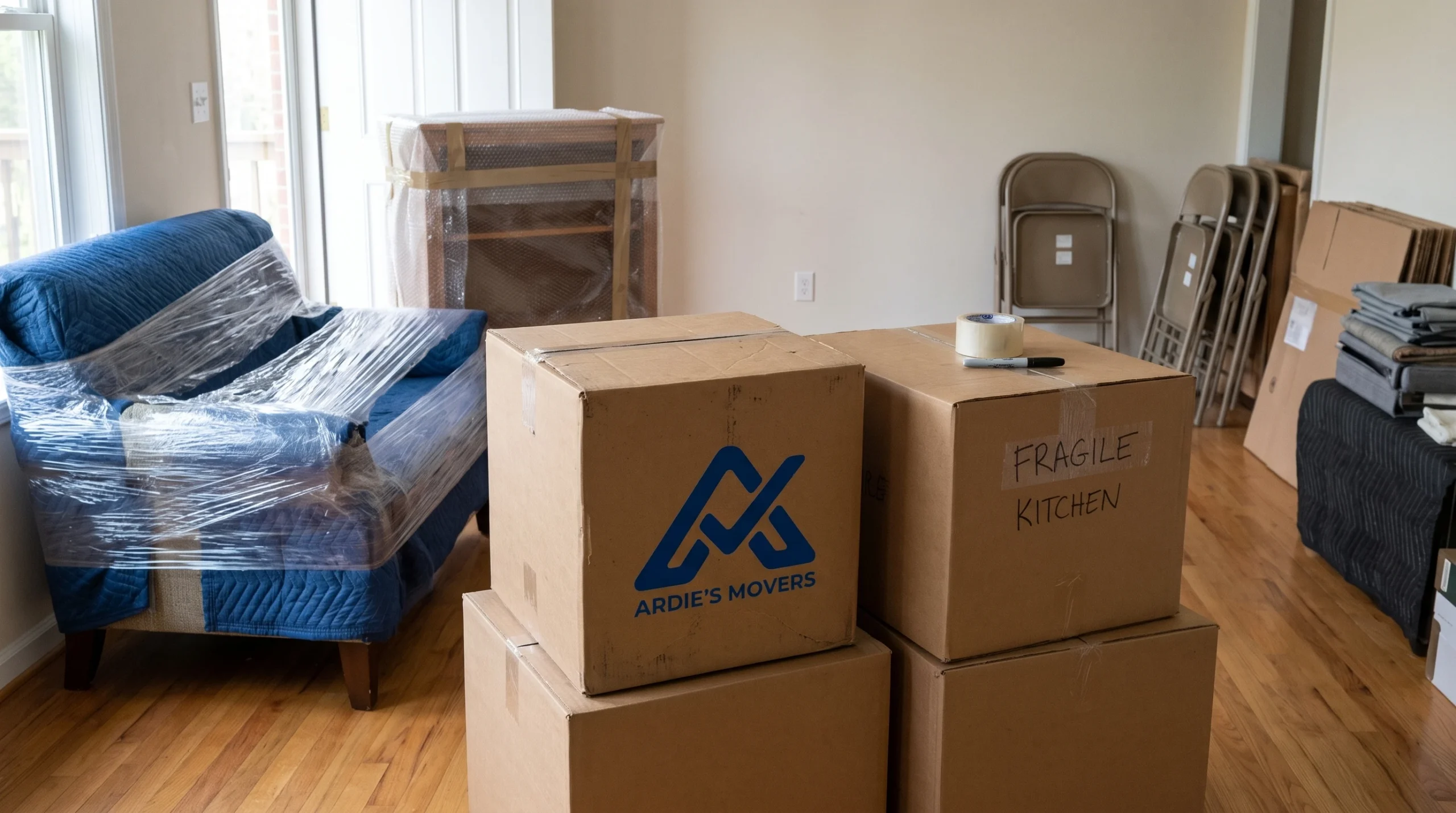
A gap between a move-out date and a move-in date can last a few days or several weeks. If you need storage between moves, first work out what must remain accessible, what can be stored, and how everything will reach the next home. That planning helps you compare options without assuming a storage provider, mover, or closing date can accommodate every change.
This is a household planning guide. Storage duration, access, handling, coverage, and pricing vary by provider. Ask Ardie’s Movers for the terms that apply to your specific request.
Map the gap before booking anything
Write down the last day you can remove items from the old property, the earliest day you can enter the new one, and when keys and utilities will be ready. If you are selling and buying, confirm the timing with the relevant professionals. A closing date alone does not establish when physical access begins.
Count the nights between homes and decide where people, pets, and essentials will stay. If the date is uncertain, ask potential storage providers how extensions work. Get the rules for notice, extra days, and redelivery in writing.
Divide belongings into three groups
- Keep with you: identification, medication, valuables, work devices, chargers, pet supplies, seasonal clothing, and anything needed before delivery.
- Store temporarily: furniture and boxes you will not need during the gap. Label boxes by destination room and make an inventory of fragile or unusually heavy items.
- Leave out of storage: perishables, hazardous materials, and anything the provider does not accept. Request its prohibited-items list and check manufacturer guidance for goods sensitive to temperature or humidity.
Photograph items before packing and record their condition. Keep irreplaceable documents with you rather than in a box that may be unavailable until move-in.
Ask the right storage questions
Before choosing a solution, ask where the goods will be held, who can access them, and whether access requires an appointment. Ask about the minimum term, extension process, payment schedule, and any separate handling or redelivery charges. Confirm that the proposed space or containers suit the belongings you intend to store.
Ask what protection or coverage is available, what is excluded, and how claims work. Do not assume a homeowner’s or tenant’s policy automatically covers goods in transit or storage; confirm the details with your insurer and the provider. Get the quote and terms in writing, and keep your inventory and any receipt or storage agreement.
Plan both transport legs
Moving into storage and delivering to the new home are separate access events. Share the old and new addresses, stairs, elevator reservations, loading zones, and parking conditions for both. If the destination building has a limited moving window, confirm it before arranging delivery.
Ask whether the same provider can handle pickup and redelivery and whether that service is included in the quote. Ardie’s Movers has a Furniture Storage page where you can start a case specific inquiry and request current availability and terms.
Pack for retrieval, not just departure
Use sturdy, closed boxes and label at least two sides. Keep an item list outside the boxes. Put small parts, such as bed hardware, in labelled bags and keep related pieces together. Ask the provider how furniture should be prepared and whether it supplies wrapping. For more preparation ideas, see Ardie’s room-by-room packing guide.
If you might need an item during the gap, keep it with you when access to storage is uncertain. Make sure each stored item has a destination and can be identified when it is unloaded.
A practical storage between moves timeline
- Before the old-home handover: confirm dates, storage terms, inventory, pickup access, and the essentials you will keep.
- During the gap: keep keys, agreements, inventory, and provider contact details available. Monitor changes to the new-home handover and give notice under the agreed terms.
- Before final delivery: confirm destination access, elevator and parking arrangements, delivery date, and any items needing particular placement.
A clear plan makes a closing-date gap easier to manage. If your project also involves a household relocation, explore Ardie’s Residential Moving service. To discuss the storage and moving details together, request an estimate.