

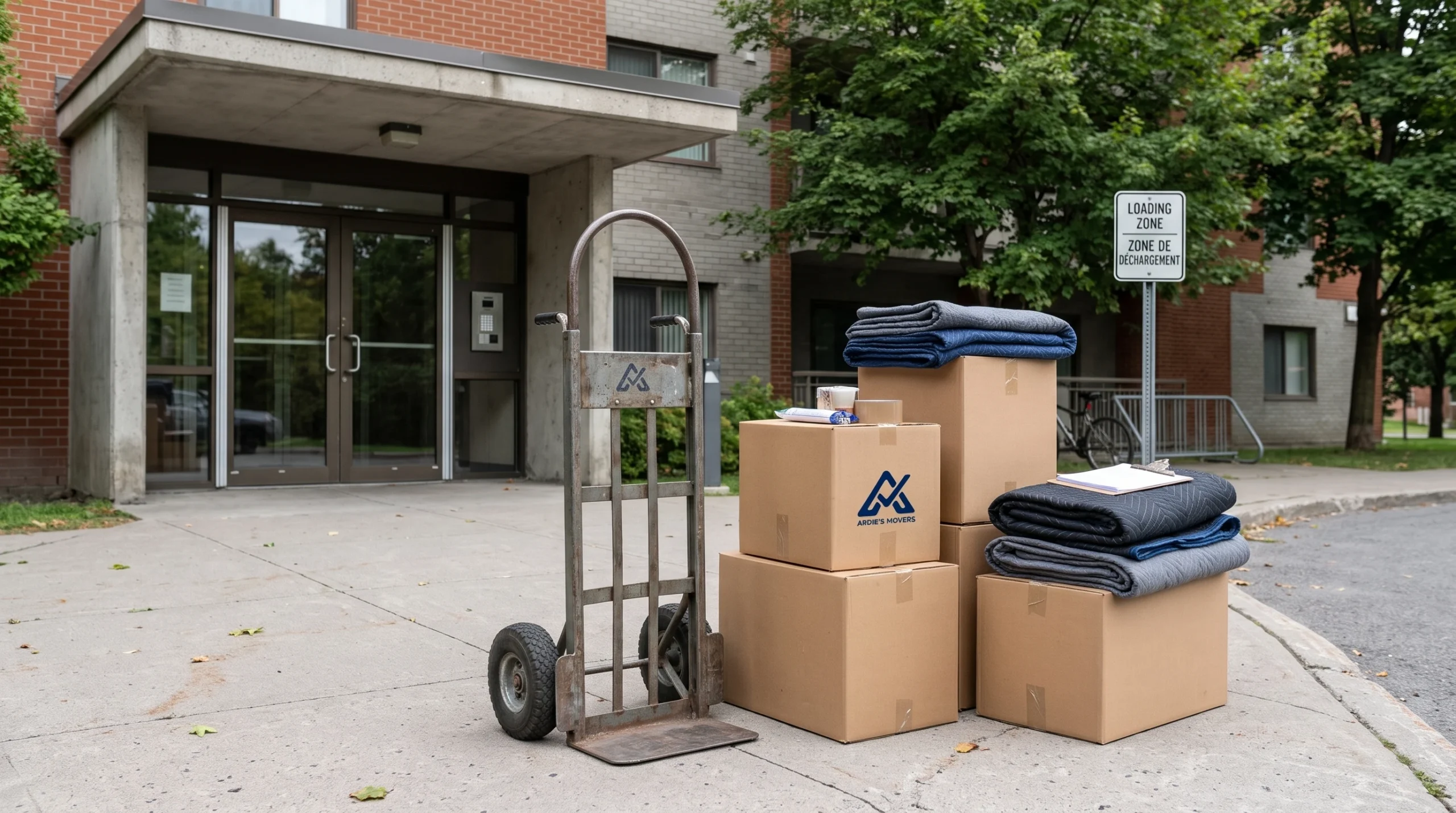
An apartment moving checklist needs to cover more than packed boxes. In Ottawa, the tightest part of the plan may be the gap between getting your keys, reserving an elevator and finding a legal place to load. Use this checklist to bring those pieces together before moving day. It applies to condos too, although every building sets its own rules.
Start with the dates and keys
Write down your last access time at the old unit and your first access time at the new one. Ask when the keys or fobs will actually be available. If you must leave one home before you can enter the other, work out where your belongings will go during the gap before you commit to a move time. Do not assume a lease start date means early-morning access.
Confirm any move-in or move-out appointment with both buildings. Record the name of the person who provided the instructions, the contact number for moving day and where movers should enter. If either date changes, update your mover and both buildings promptly.
Ask each building about elevator and loading rules
Some apartments have a service elevator, a booking window or a designated loading door. Others may share a regular elevator with residents. Ask each property manager what applies to that building rather than relying on a neighbour’s experience.
Get answers to these questions:
- Does the elevator need a reservation, and for how long?
- Is there a move-in deposit or a required building form?
- Which entrance and loading area may be used?
- Are there limits on moving hours?
- Is there a height or length limit for the loading area?
- Who can help if the elevator or access door is locked on moving day?
Keep the answers in one note you can share with everyone involved. If a building requests paperwork or proof of insurance, ask your mover directly whether it can provide what the building requires. Do not assume any document or service is included.
Plan the route from the unit to the vehicle
Walk the full route at both addresses: room to hallway, hallway to elevator or stairs, elevator to lobby, and lobby to loading area. Take a few measurements for furniture that may be difficult to move. Door clearances, tight turns and elevator dimensions matter more than the nominal size of a room.
Make a short list of bulky pieces and photograph any unusual access point. Note stairs, long walks, narrow doors and restricted loading. Share that information when discussing the move. If a piece may need disassembly, decide who will do it and whether the right tools and labelled hardware bags will be ready.
Check Ottawa parking before move day
A loading area is only useful if the vehicle can legally reach it when needed. Look at posted signs and the building’s instructions at both addresses. Ask the property manager whether a loading bay needs a reservation.
The City of Ottawa states that a residential or commercial moving vehicle does not require an encroachment permit when it follows the existing parking regulations. A vehicle that needs to operate outside those regulations may require an encroachment permit. Check the City’s current moving-vehicle and right-of-way guidance for the exact street and date rather than assuming that an empty curb can be used.
If your pickup is outside Ottawa, apply the same check to that municipality or property. Share the final loading location and any access code with your mover before the scheduled arrival.
Separate the essentials from the shipment
Keep keys, fobs, identification, medication, chargers, lease or closing documents and anything needed that evening in a bag that stays with you. Set aside items the mover will not transport and confirm the mover’s policy for anything fragile, valuable or restricted. Label boxes by destination room so they can be placed without repeated questions at the new unit.
This guide focuses on building logistics. For final packing and room-preparation tasks, use Ardie’s separate guide to what to do before movers arrive.
Do a final two-address check
A day or two before the move, confirm the elevator windows, access contacts, key handover and loading locations again. Weather, building maintenance or another resident’s booking can alter a plan. Have a way to reach the property manager if something changes.
At the old unit, check cupboards, closets, storage lockers and the balcony before you return the keys. At the new unit, confirm that the planned entrance is open and that someone with the keys or fob will be there. Photograph the condition of the units if that is useful for your records, following any applicable building or lease instructions.
A compact apartment moving checklist
Before you set the move time
- Confirm the old-unit exit and new-unit access times.
- Ask both buildings about elevators, loading, forms and moving hours.
- Measure bulky furniture and tight points along each route.
- Check parking and the vehicle’s permitted loading spot.
- Share access details, photos and contact numbers with your mover.
Before the vehicle arrives
- Reconfirm building bookings and key handover.
- Keep essentials and restricted items with you.
- Make sure the loading entrance can be opened.
- Have a contact ready if an elevator or door is unavailable.
Moving between an Ottawa apartment and another home in the Ottawa Valley? Review Ardie’s residential moving information and Ottawa moving service area. Call 343-353-9900 to discuss your addresses and access details.