

Moving appliances takes more planning than carrying a box. A refrigerator, washer, dryer or range can be heavy, awkward to grip and connected to water, gas or electricity. Start with the model’s instructions, confirm who is handling disconnection and reconnection, and measure the entire route before anything is moved.
Start with the appliance manual and the move scope
Find the owner’s manual or the manufacturer’s support page for each appliance. Preparation varies by model, especially for refrigerators, front-load washers and appliances connected to a water line. Follow the instructions for cleaning, defrosting, draining, securing moving parts and setting the appliance upright after transport. If the manual is missing, search by the exact model number instead of relying on a generic checklist.
Before moving day, confirm whether each appliance is included in the moving plan. Share its type, approximate dimensions, weight if known, model, condition and any unusual parts.
Photograph the appliance and its route. A clear assessment can identify a narrow doorway, tight stair turn or connection that needs attention before the schedule is set.
Moving crews do not replace appliance installers. Arrange a qualified technician for any gas, hard-wired electrical, plumbing or water-line disconnection or reconnection. Do not pull an appliance away while it is still connected, and do not assume a moving quote includes installation work.
Prepare a refrigerator or freezer carefully
Remove food and loose shelves or bins as directed by the manufacturer. If the unit needs defrosting, allow enough time for the model-specific instructions and protect the floor from water. Dry the interior, secure shelves that are meant to stay in place, and keep small parts together in a labelled bag.
A refrigerator is commonly transported upright. Whirlpool’s guidance says to keep a refrigerator upright during a move or while it is stored; check the manual for your specific model and securement method. Do not guess about how long to wait before plugging it in after transport. The required settling time can depend on the appliance and how it was moved, so use the manufacturer’s directions.
Get a washer and dryer ready
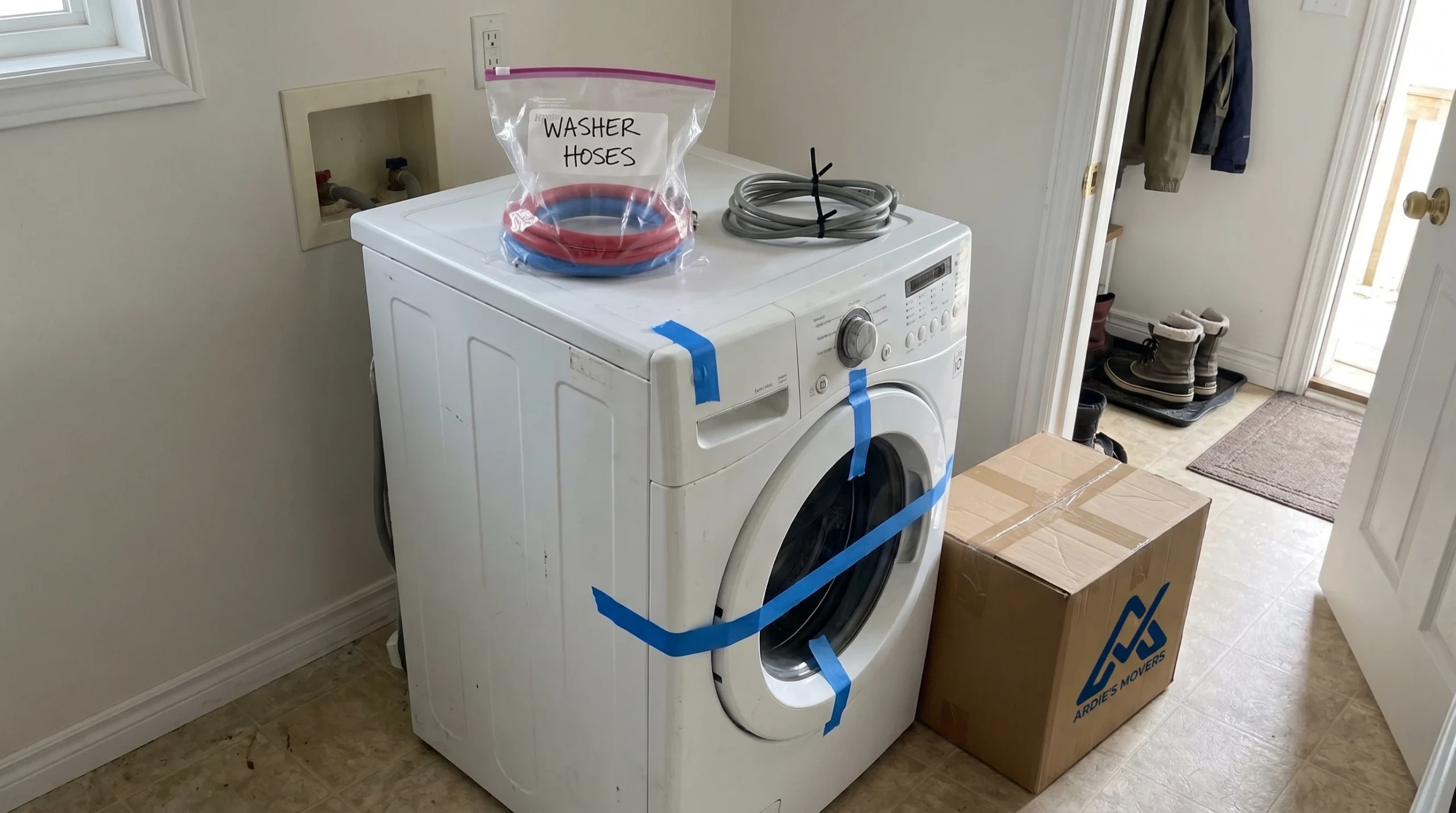
For a washer, shut off the water and have the hoses disconnected and drained before the move. Store hoses and accessories together. Some front-load models use shipping or transit bolts to hold the drum during transport. Check the exact model instructions for whether they are required and how to install them; do not improvise with substitute hardware.
Keep any transit bolts for future moves, and follow the manual before using the washer again. If a dryer uses gas or has a hard-wired connection, book a qualified technician to disconnect and reconnect it. For any dryer, secure the power cord, vent parts and loose accessories so they do not catch on a doorway or get lost.
Dishwashers, ranges and other appliances may have separate water, electrical or fuel connections. Ask the installer what must be disconnected and when. The moving plan should begin only after the appliance is safely disconnected and ready to travel.
Measure the route, not just the appliance
Measure the appliance’s height, width and depth. Then measure the narrowest points along the route: door openings, hallways, stair turns, landings and the entrance to the moving vehicle. Include handles, trim, railings and any protruding parts that reduce clearance. Compare the measurements before moving day and flag any uncertain turn rather than hoping the appliance will fit.
Check whether doors, drawers or removable handles need to be taken off according to the manual. Protect nearby walls and flooring, and clear the route of rugs, boxes and loose cords. For apartment or condo moves, confirm the building’s access and loading rules with the manager. Do not assume an elevator or loading area is available without a reservation.
Decide whether to move it yourself
A small appliance may look manageable in a photo and still be difficult to control on stairs or around a tight corner. Consider the appliance’s weight, your experience, the number of people available, the route and the vehicle. A suitable appliance dolly and securement can matter, but equipment does not make an unsafe lift safe. Do not attempt to carry a heavy appliance alone or move it on stairs if the team cannot keep control of it.
A professional assessment is useful when an appliance is large, the route is restricted, there are multiple stairs, or a connection needs attention. Share measurements and photos in advance so the scope can be reviewed. Ardie’s Movers lists appliance moves among its small-move services, subject to assessment of the item and access. Confirm current availability and any exclusions when requesting a quote; disconnection and reconnection are not included.
A short checklist for moving appliances
Before the move, make sure you have:
- The exact model and its preparation instructions.
- A clear list of appliances included in the move.
- A technician booked for any required gas, plumbing or electrical work.
- Measurements for the appliance and every narrow point on the route.
- A plan for food, water, shelves, cords, hoses and model-specific transit hardware.
- Photos of the appliance, access points and stairs to share with the mover.
Planning an appliance move in the Ottawa Valley
For a move based in Arnprior, Renfrew County or West Ottawa, the same planning steps apply: identify each appliance, confirm its preparation instructions and flag access conditions early. Rural driveways, stairs or a long carry can affect how an item is handled, so include those details in the moving plan rather than waiting until arrival.
Before requesting a moving quote, share the pickup and delivery addresses, date, appliance list, approximate sizes and route photos. Ardie’s Movers is based in Arnprior and serves Renfrew County, West Ottawa and nearby communities. Review the small-moves service or residential moving service and request a moving quote. If you are preparing smaller kitchen items, see the kitchen packing guide.
Frequently asked questions
Should I disconnect appliances before the movers arrive?
Follow the appliance manual and arrange a qualified technician for gas, hard-wired electrical, plumbing or water-line work. Confirm the appliance is disconnected and ready before the crew begins moving it.
Can a refrigerator be moved on its side?
Do not assume it can. Manufacturer guidance commonly recommends upright transport, but instructions can vary by model. Check the manual and follow it for transport and restart.
Do washers need transit bolts for a move?
Some front-load washers use them, but requirements vary. Check the exact model instructions and keep any shipping hardware for future use.
Can Ardie’s Movers disconnect or install appliances?
The current small-moves page says appliance disconnection and reconnection are not included. Confirm the moving scope with Ardie’s Movers and arrange a qualified installer for connection work.
Published by the team at Ardie’s Movers, Arnprior, Ontario.